Pasture-raised
Pasture-raised, grain-finished, and we will show you the records
Every animal we offer was born on this homestead in Charlotte County, Florida and has been out on open pasture every day since. No feedlot, no sale barn, no auction ring — the same people have handled them since they were calves. That familiar routine helps keep them calm, especially when it matters most. Nobody has to take our word for any of it — the feed and health record is open, and you are welcome to come look.
On the pasture
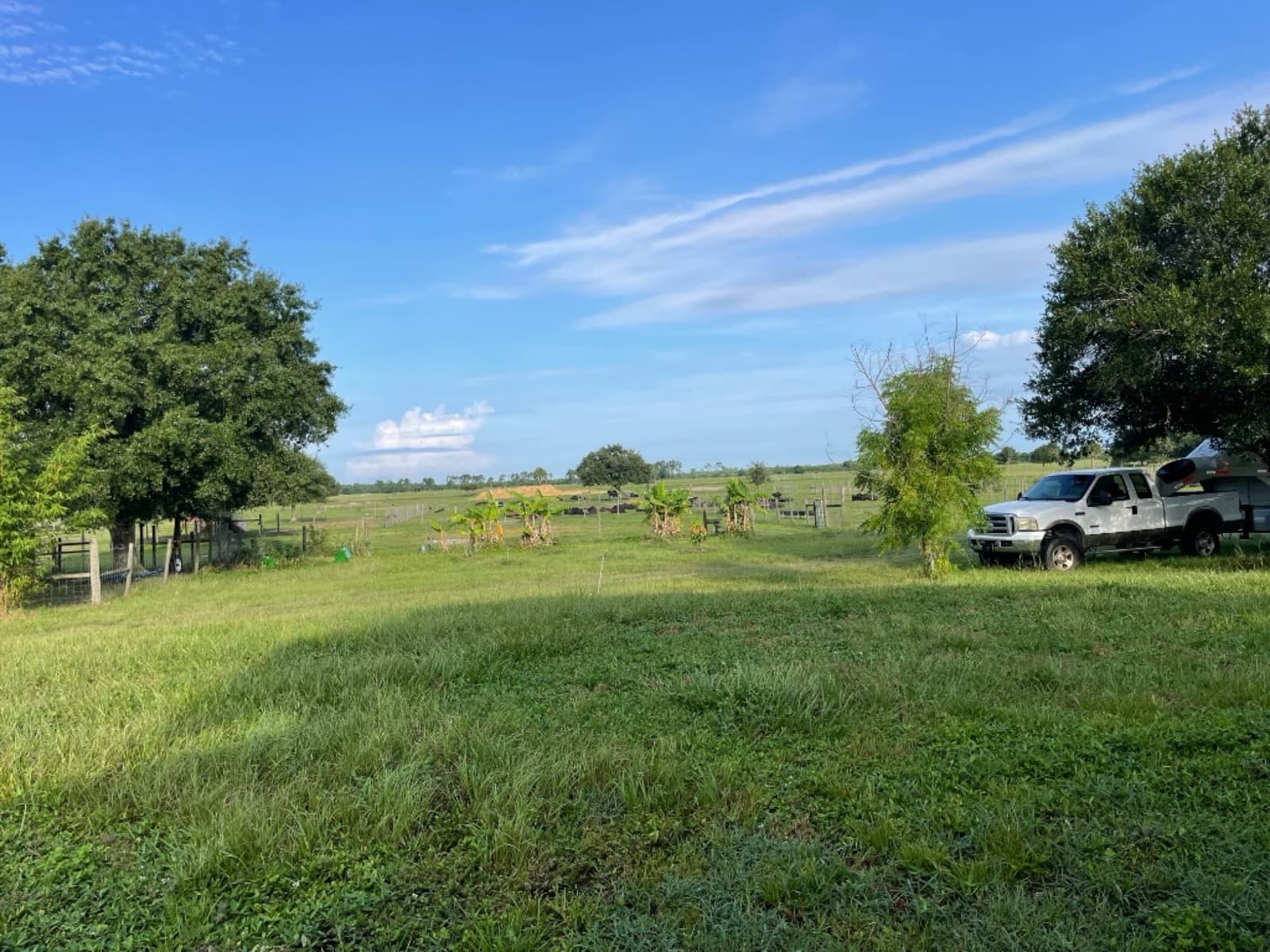
It is the same clip we run as an advert, which means you are seeing exactly what a stranger on Facebook sees — the cattle, the pasture they stand in, and the fence line, on an ordinary morning. Nothing in it was shot anywhere but here.
- 100% fullblood Wagyu, AWA-registered Japanese genetics
- Pasture raised in Southwest Florida, born here and out on pasture every day
- 600+ days on grain · 30+ months old, no growth implants
- No feedlot, no sale barn
Calm care protects beef quality
Wagyu takes time—more than 30 months of careful raising and at least 600 days on grain. During that time, our cattle follow a familiar routine: open pasture every day, the same handlers from calf to harvest, and no trip through a feedlot, sale barn, or auction ring.
That consistency matters. When cattle become frightened or overstressed, stress hormones cause their muscles to use stored energy. If too much is depleted before harvest, the beef can be darker, firmer, less tender, and less flavorful. Calm, familiar handling helps protect the eating quality built through Wagyu genetics and a long grain finish.
Good Wagyu care is not about beer, massages, or other folklore. For us, it means room to move, familiar people, predictable feeding, quiet handling, and a short final trip to the processor.
Pasture-raised is not the same claim as grass-fed
Worth clearing up first, because the two terms get treated as interchangeable and they are not. Pasture-raised describes where an animal lives. Grass-fed describes what it eats.
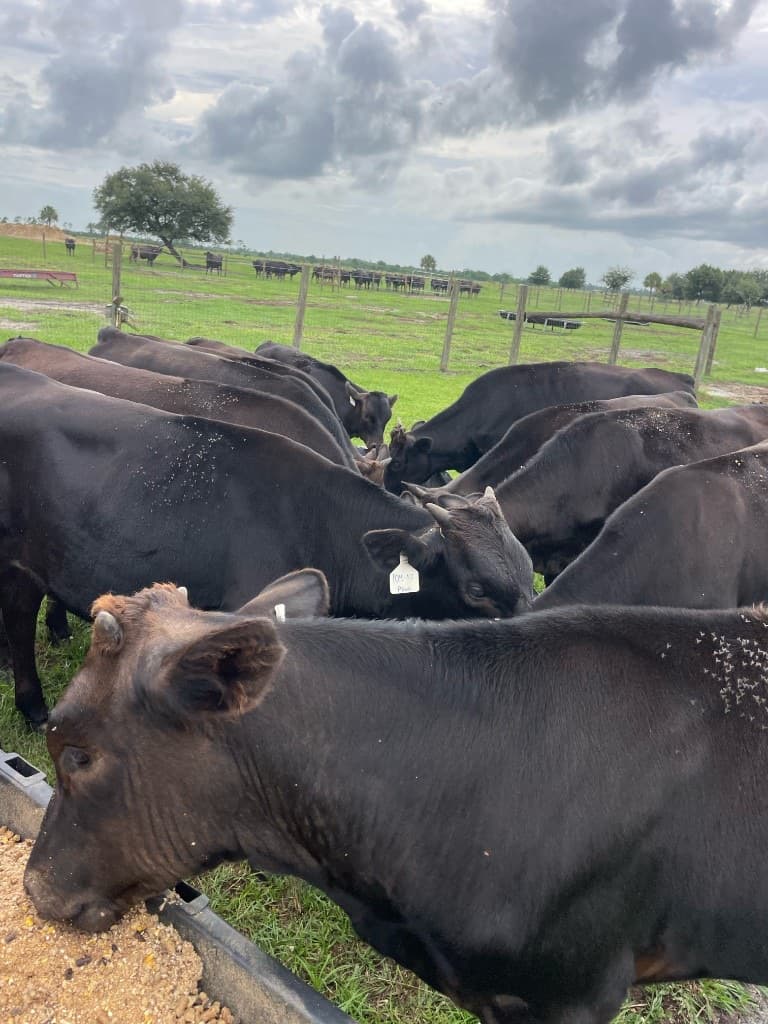
Ours are pasture-raised and grain-finished — 600+ consecutive days on grain, or until they are 30+ months old, which is what builds the intramuscular fat Wagyu is bought for. They live outside and they eat grain. Both are true at once, and the photo here is the two of them in one frame.
So if you came here looking specifically for 100% grass-finished beef, we are not that, and we would rather say so now than take your deposit and disappoint you at pickup. We are also not certified organic. What we are is a small homestead that can tell you exactly how one animal was raised.
What we do not use, and why
No growth implants, ever. Commodity cattle are commonly implanted to convert feed into weight faster. We have never used one. We do not push a feedlot clock — the program lets cattle run 600+ days on grain, or 30+ months of age, rather than forcing a finish in a few months. Slower is the whole point with this breed.
No antibiotics in feed, and none as routine prevention. Nothing is mixed into the ration and nothing is given on a schedule. What we will not promise you is that an animal would go untreated if it got sick — a ranch that would let a steer suffer to protect a marketing line is not one you should buy from. If it ever happens, it goes in the record and we tell you. That is a narrower claim than the ones you will read elsewhere, and it is one we can actually stand behind.
No ractopamine or other beta-agonists. These are fed in the final weeks to add lean mass. On a Wagyu that is working directly against the reason you are buying the animal, so the question never really comes up here.
One animal, one tag
This is the part most people have not thought about. Supermarket ground beef is typically combined from many carcasses, which is also why a recall sweeps up so much of it at once. There is no way to trace a package back to an animal, because it was never one animal.
Everything in your freezer comes from the one steer you reserved and nothing else. One steer, one AWA registration number, one feed record, one set of handlers. If something about your beef ever seems off, there is exactly one animal to ask about and we already know his history.
Pedigree is verifiable rather than asserted — every animal we offer is AWA-registered fullblood Japanese Wagyu, with the owner of record on the certificate. Our first harvest (FB94946) is the measured proof page for weights and yield — not the animal currently for sale.
Come see for yourself
This is the one thing no online beef seller can offer you, so we would rather lean on it than on adjectives. Feed and health records are open to any buyer who wants to read them, and you can come meet the animal before you commit a dollar.
Saturdays 9:00 a.m.–12:00 p.m. Eastern, by appointment — walk the pasture, meet the animal, and taste Wagyu from our first harvest. The tasting is free. It is a working homestead, so wear boots. Call or text (941) 888-4508 to book.